

CUSP
A Connected Data Foundation for Early Childhood Systems
Early childhood data often lives in disconnected systems, making it difficult to understand who is being served, where services are available, and where gaps remain.
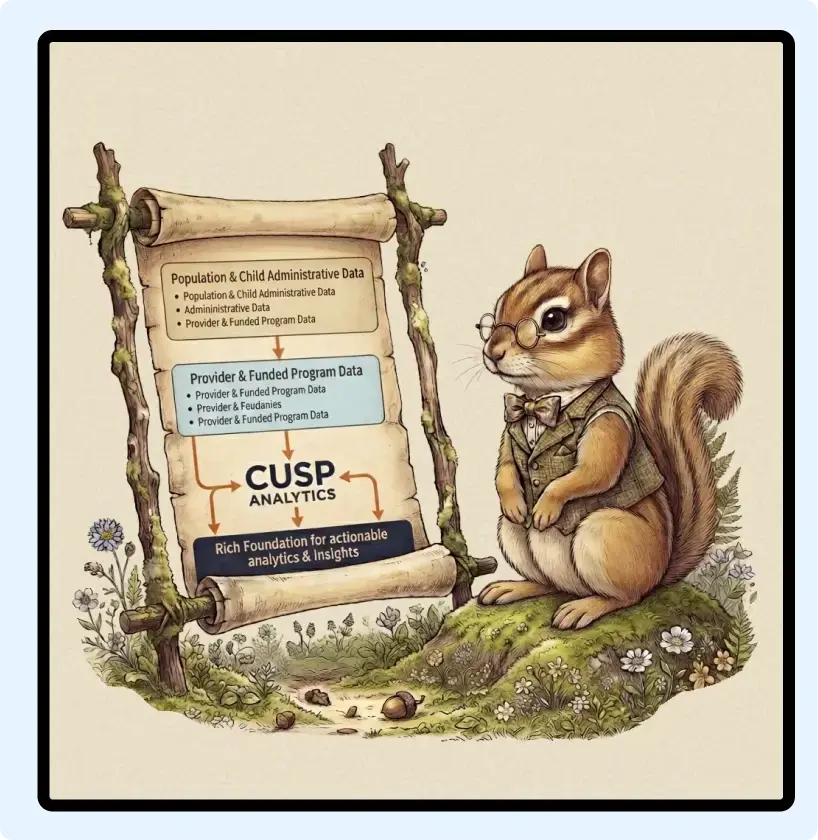
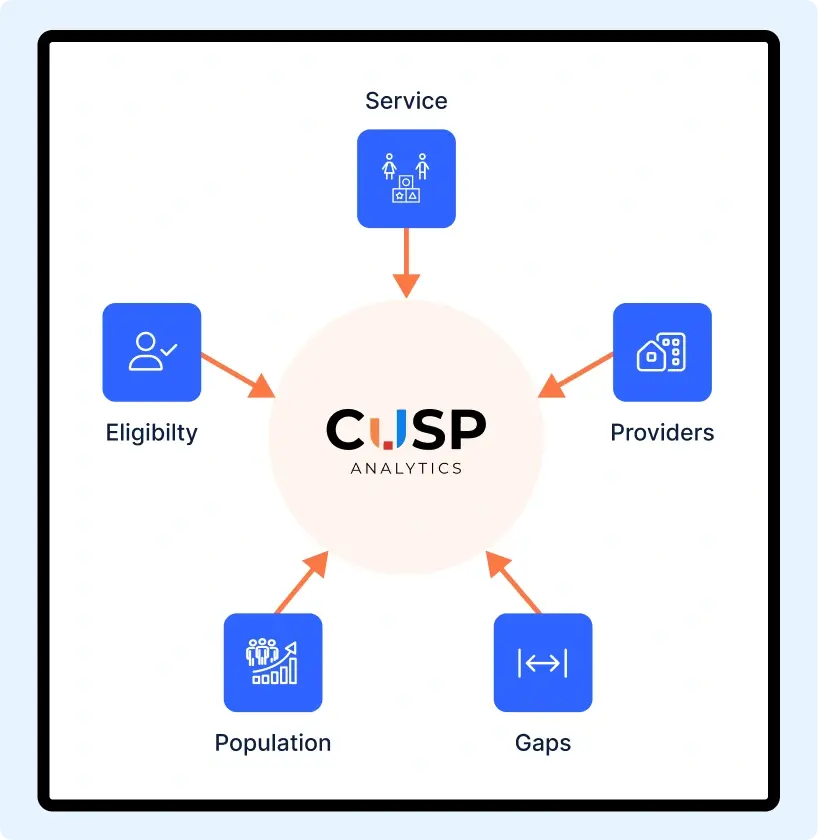
CUSP Foundation integrates information about children, families, providers, and programs into a single source of truth. With this comprehensive view of the early childhood system, agencies can:
-
 Understand child care supply, demand, and service utilization
 -
Identify unmet needs and gaps in access to child care
-
Monitor provider capacity and workforce trends
-
Analyze outcomes across programs and populations
-
Make faster, more informed policy and investment decisions that improve outcomes for children and families
-
Track progress and demonstrate return on investment to policymakers, funders, and other stakeholders
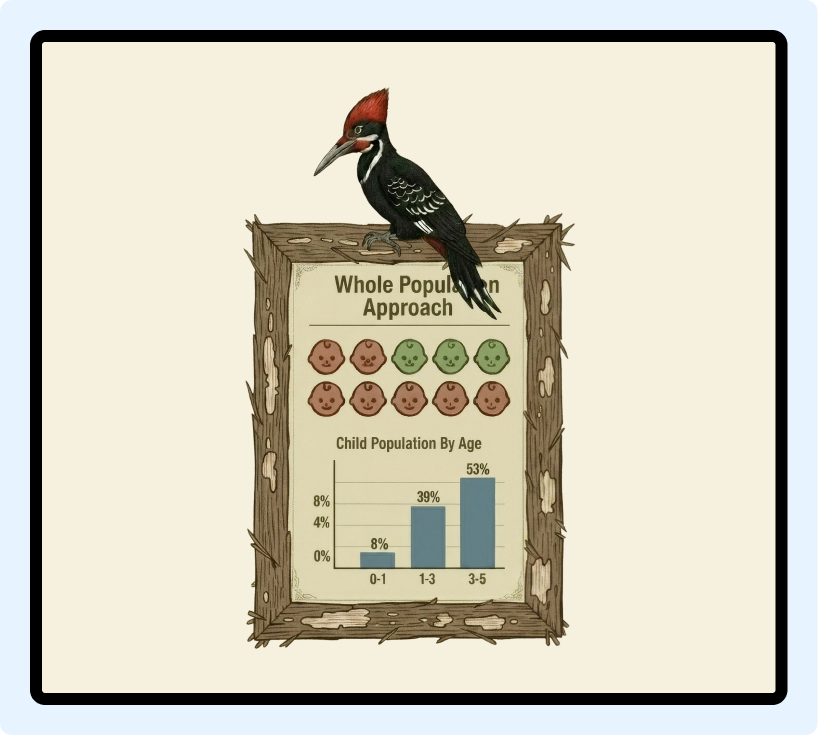
Unlike traditional reporting tools, CUSP Foundation models the entire child population—not just children currently enrolled in services—to help agencies understand both existing service delivery and unmet need.
What Is CUSP Foundation?
CUSP Foundation is 3Si’s early childhood data platform. It provides the analytics infrastructure states and local governments need to make more informed decisions.
Built as a scalable Early Childhood Integrated Data System (ECIDS), CUSP Foundation connects child, family, provider, and program data across every system, helping governments move from fragmented data to coordinated action.
Core Modules
The Core Modules are the primary components of CUSP Foundation, bringing together the tools agencies need to integrate data and support coordinated, data-driven decision-making. With an integrated data model, ready-to-use analytics, and centralized access to dashboards, reports, and resources, the Core Modules help agencies establish a trusted data foundation for understanding and improving early childhood systems. Whether you're building Early Childhood Integrated Data System (ECIDS), modernizing an existing Statewide Longitudinal Data System (SLDS), or expanding your analytical capabilities, the Core Modules are flexible, scalable, and grow with your needs.

CUSP Integrated Data Model
The CUSP Integrated Data Model is what makes everything else possible. It standardizes and integrates child, provider, and program data into a unified, governed data model. By creating a shared, single source of truth across agencies and programs, the CUSP Integrated Data Model gives states and local governments a more complete and accurate understanding of their early childhood system, enabling better coordination, more reliable reporting, and more informed decision-making.
With the CUSP Integrated Data Model, agencies can:

Research Starter Kit (RSK)
The Research Starter Kit delivers immediate value with pre-configured charts, maps, and reports that can be deployed rapidly with minimal setup. The Research Starter Kit’s interactive tools and filters make it easy and intuitive to move from high-level insights to detailed analysis. Designed for analysts and program administrators, this module helps agencies quickly gain a clear picture of where their system stands today and where gaps are growing.

CUSP Analytics Library
The CUSP Analytics Library is a centralized hub of all CUSP analytics, dashboards, reports, and data resources. Users can immediately access analytics on enrollment trends, provider capacity, demographic disparities, and other key metrics—supporting both routine reporting and strategic planning without the time and effort required to build reports from scratch. The CUSP Analytics Library also serves as a gateway to the CUSP Network, helping agencies from across the CUSP network share insights, learn from peers, and benchmark progress.
Users can:
Extend Your Insights with Bundled Suites
Built on top of the CUSP Foundation, bundled suites transform integrated data into targeted insights that support specific planning and policy needs.
Service Gaps Suite
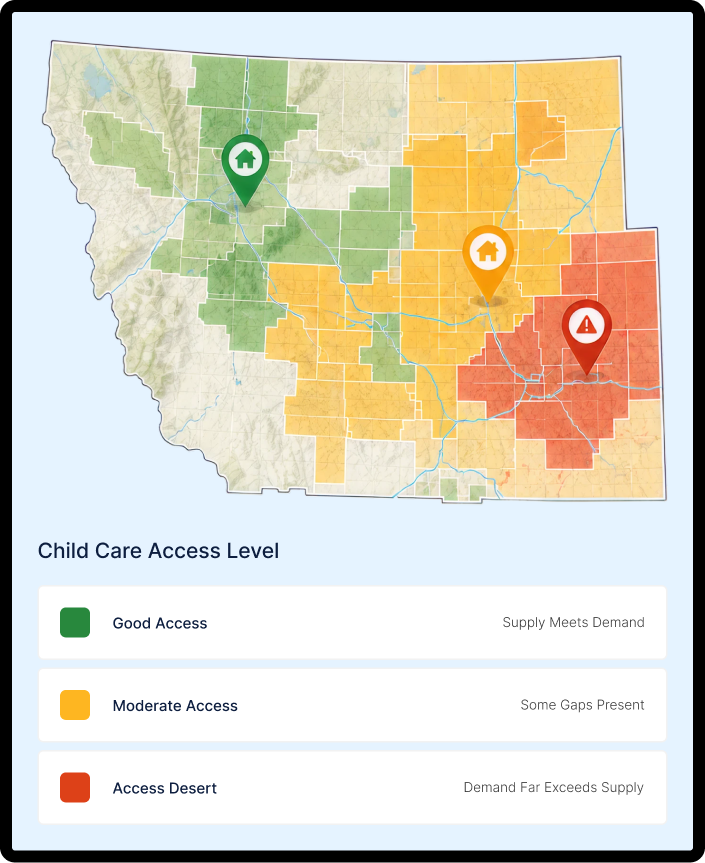
The Service Gaps Suite helps agencies understand where children and families face the greatest barriers to accessing child care. By combining service, population, and community data, the Service Gaps Suite enables agencies to identify unmet needs, understand the factors contributing to access challenges, and prioritize investments where they will make the greatest difference.
With the Service Gaps Suite, agencies can:
-
Identify communities where child care availability falls short of family needs
-
Assess and compare access to child care across regions to understand where opportunities are strong and where barriers to child care access persist
-
Analyze disparities in access across race, income, geography, and other demographic characteristics to identify underserved populations
-
Understand how transportation, distance, and other practical barriers affect families' ability to find and use child care
-
Evaluate how social and economic conditions influence child care access and family outcomes
-
Prioritize funding, program expansion, and policy interventions in areas with the greatest unmet need
Service Supply Suite
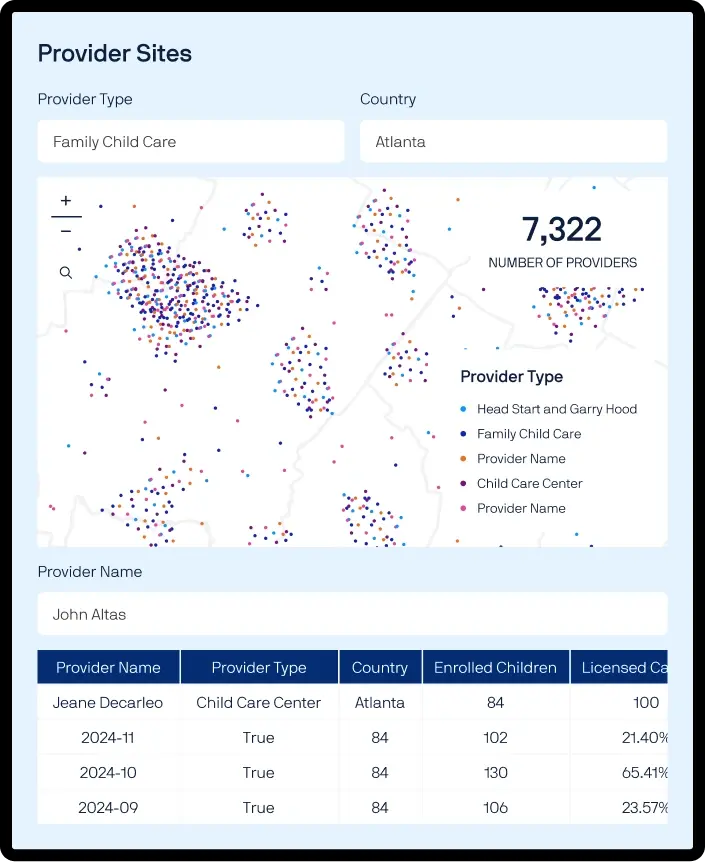
The Service Supply Suite helps agencies understand the availability, stability, and distribution of child care services across their city or state. By analyzing integrated data on licensing, workforce, subsidies, and other information, agencies can identify emerging supply challenges, anticipate future needs, and target resources where they will have the greatest impact.
With the Service Supply Suite, agencies can:
-
Monitor provider openings, closures, and workforce trends to detect potential supply disruptions before they become critical
-
Assess provider stability and capacity utilization to support retention and expansion strategies
-
Compare supply patterns across regions to prioritize investments and target resources to where the need is greatest
-
Communicate supply needs and trends to policymakers, funders, and community
A Foundation for Data-Driven Decision Making
CUSP Foundation provides the integrated data and analytics capabilities agencies need to understand their early childhood systems and act with confidence.
Whether you seek to improve cross-agency coordination, address child care shortages, or plan for future needs, CUSP Foundation provides the foundation for turning data into action. Connect with our team to learn how CUSP Foundation can help your agency.