
What Are Red Flags?

In the CUSP system, red flags are indicators that something in provider data may require closer review. They don't automatically mean there's a problem. Instead, they highlight patterns or unusual activity that could signal a compliance, safety, or quality concern.

As a trusted child care provider red flags analytics platform, CUSP's automated child care red flag scoring software surfaces child care provider unusual activity pattern analytics- including child care provider unusual billing patterns, child care attendance documentation compliance gaps, and child care billing anomaly detection signals- so agencies can take proactive steps before issues escalate. By spotting potential issues early, agencies can ensure providers are operating within guidelines and that families receive safe, consistent care.

Risk and Audit

Give your program integrity and audit teams a fair, defensible, data-driven way to strengthen accountability, improve operational efficiency, and make the most of limited oversight resources.

What you can do with CUSP Risk and Audit

Risk and Audit brings together data from multiple programs into one operational system — eliminating duplication, streamlining reviews, and supporting faster, more confident oversight decisions.

Identify and prioritize risk

Quickly see which providers require attention 

  • icon-listing
    Data-driven risk assessments
  • icon-listing
    Intuitive filtering and prioritization
  • icon-listing
    Focused use of oversight resources

Understand why a provider is flagged

Go beyond the risk score to see the evidence and factors behind it — no black-box scoring.

  • icon-listing
    Provider-level insights
  • icon-listing
    Evidence behind the score and key risk drivers
  • icon-listing
    Transparent, explainable scoring

Track trends over time

Monitor changes and patterns in provider behavior to spot emerging issues before they escalate.
  • icon-listing
    Trend analysis
  • icon-listing
    Historical comparisons
  • icon-listing
    Early warning indicators

Act with confidence

Support oversight decisions with consistent, objective data. 
  • icon-listing
    Evidence-based reviews
  • icon-listing
    Repeatable processes
  • icon-listing
    Defensible decision-making
image (7)

What Are Red Flags? 🚩

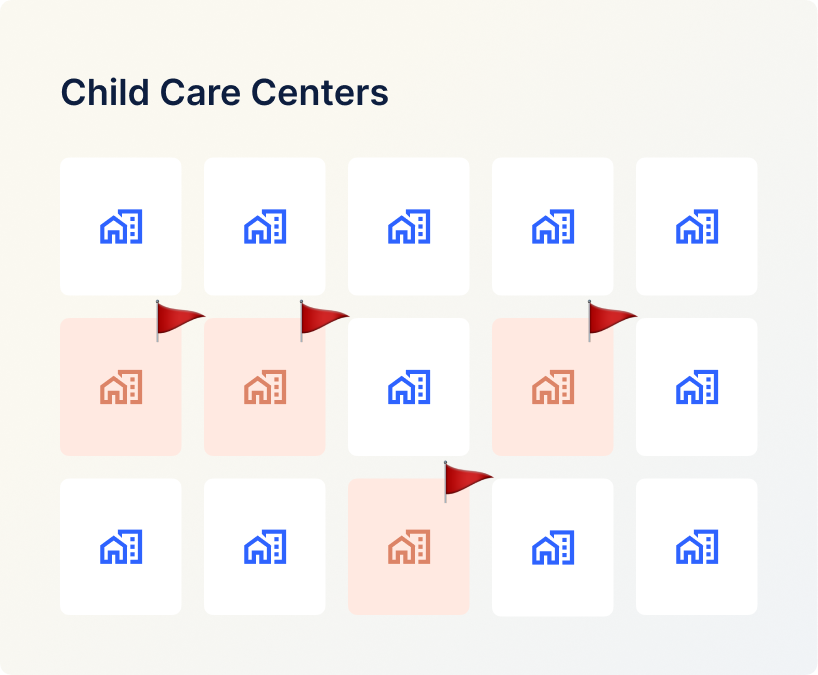
Red flags are indicators that a provider may require closer review.

A red flag does not automatically mean there's a problem. Instead, it highlights patterns or unusual activity—such as an anomaly in billing patterns or attendance—that could signal a compliance, safety, or quality concern.

By spotting potential issues early, Risk and Audit helps program integrity and audit teams take a proactive approach to oversight, support consistent program operations, and ensure children receive safe, consistent care.

Stronger Oversight. Smarter Decisions. Better Outcomes.

When oversight is data-driven and consistent, state agencies see measurable results:
reduced risk exposure, stronger fiscal accountability, and more efficient use of oversight staff.

With Risk and Audit, agencies can:

  • Prevent fraud, waste, and abuse through proactive, data-driven monitoring of program and payment activity
  • Strengthen readiness for federal and state reviews, including Office of Inspector General (OIG) audits of CCDF and other federally funded programs
  • Maintain child care payment accuracy and compliance
  • Maximize limited oversight resources by prioritizing reviews based on risk
  • Scale oversight without increasing staff burden
child-care-center-image

Why It Matters

Child care agencies face mounting pressure to do more oversight with fewer resources. Traditional review processes rely on disconnected systems and manual analysis, often leaving critical risks undetected until they become costly problems.

Risk and Audit helps program integrity and audit teams do more with the capacity they have by automating risk identification, focusing reviews where they are most needed, and bringing critical data into a single view. Instead of spending time searching for information, oversight teams can focus on investigating and taking action.  

The result is a more efficient, transparent, and proactive approach program integrity. 

Frequently Asked Questions

What are "red flags" in Risk and Audit and how are they different from fraud alerts?

Red flags are data-driven indicators that a pattern or case may warrant closer review. Risk and Audit applies transparent, explainable scoring to highlight child care provider unusual activity patterns, such as child care billing anomalies or attendance documentation compliance gaps. This nuanced approach allows your team to triage with context rather than simply react to alarms. It's a more evidence-based method that supports child care fraud waste abuse prevention without placing unnecessary burden on providers.

How does CUSP's provider risk scoring help auditors prioritize which cases to review first?

Risk and Audit applies standardized child care provider risk scoring methodology to evaluate every enrolled provider using objective, multi-dimensional data, including billing history, attendance trends, and compliance records. Risk and Audit has built-in risk-based child care audit prioritization logic that show which cases carry the highest potential risk. The result is a risk-based inspection scheduling capability that helps direct staff time and resources where they can have the greatest impact.

How does Risk and Audit help state agencies protect CCDF federal funding from audit penalties?

Risk and Audit is designed to help oversight teams maintain compliance with federal program requirements and demonstrate due diligence ahead of federal and state reviews. By combining federal funding compliance analytics with program integrity monitoring, Risk and Audit flags potential issues — including duplicate payment patterns, attendance anomalies, and documentation gaps — before they become audit findings. The system also supports child care OIG audit readiness by generating consistent, documented audit trails. This makes Risk and Audit a valuable asset for agencies working to strengthen their CCDF program integrity standing and make the most of limited oversight resources.

How is Risk and Audit different from standalone child care fraud detection tools?

Standalone child care fraud detection software typically focuses narrowly on payment anomalies in a single program. Risk and Audit takes a broader approach — it's a fully integrated child care risk audit analytics platform that spans licensing, subsidy, and quality programs in one unified view. It combines child care subsidy fraud detection, attendance anomaly detection, and provider monitoring into one cohesive system, eliminating the siloed, duplicative workflows that slow agencies down. Where standalone point solutions flag individual transactions, Risk and Audit supports the full oversight lifecycle — from initial risk assessment through review and corrective action — backed by consistent, evidence-based processes that standalone tools simply cannot match.

Can Risk and Audit track trends over time and provide early warning signals before issues escalate?

Yes! This is one of Risk and Audit's most powerful differentiators. Unlike point-in-time reviews, CUSP continuously monitors risk trend data over time and uses historical child care compliance comparisons to identify when patterns are shifting in ways that may signal emerging risk. These monitoring capabilities give program integrity and audit teams the ability to intervene earlier, reducing the likelihood of significant financial loss or program harm. Combined with child care provider compliance pattern detection and ongoing billing and attendance monitoring, Risk and Audit gives your team a complete, time-aware view of provider risk long before a problem becomes a crisis.

Ready to put limited staff time where it can make the most difference?

Request a demo to learn how Risk and Audit can support your oversight and compliance teams.