CUSP Advanced Module
Child Care Program Lifecycle Analytics
CUSP Program Lifecycle Analytics gives states and local government agencies a complete view of how families move through the child care system—from application and eligibility determination to placement, participation, and program exit.
With this powerful child care program management software, agencies can track timelines, monitor compliance, identify bottlenecks, and make faster, more informed decisions that support positive outcomes for children and families.
Understand the Full the Participant Journey
Gain visibility into how families move through the child care system, from initial application through program exit.
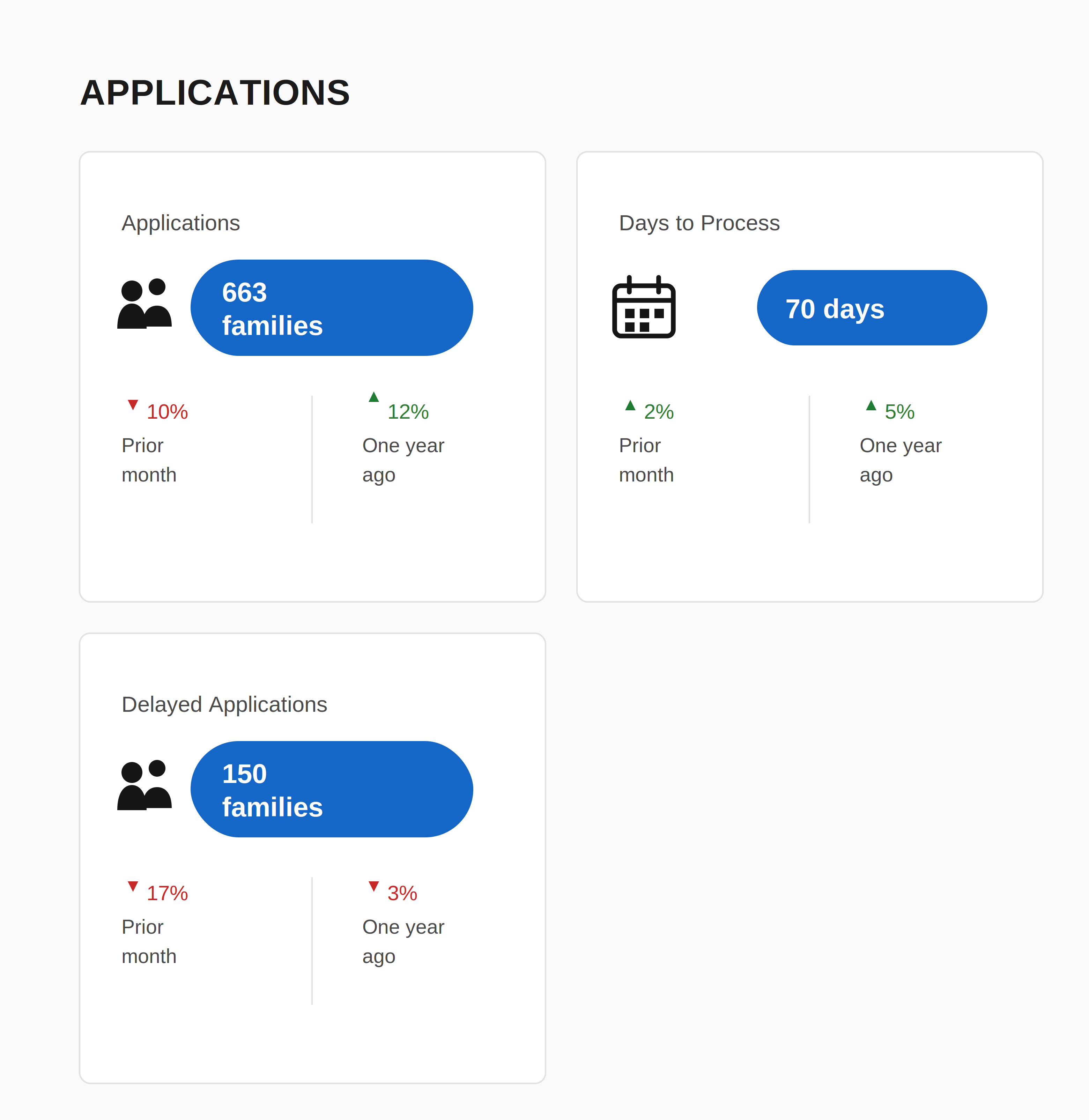
Families
697
Application
Track application volume, intake activity, and processing timelines to identify and address bottlenecks early.
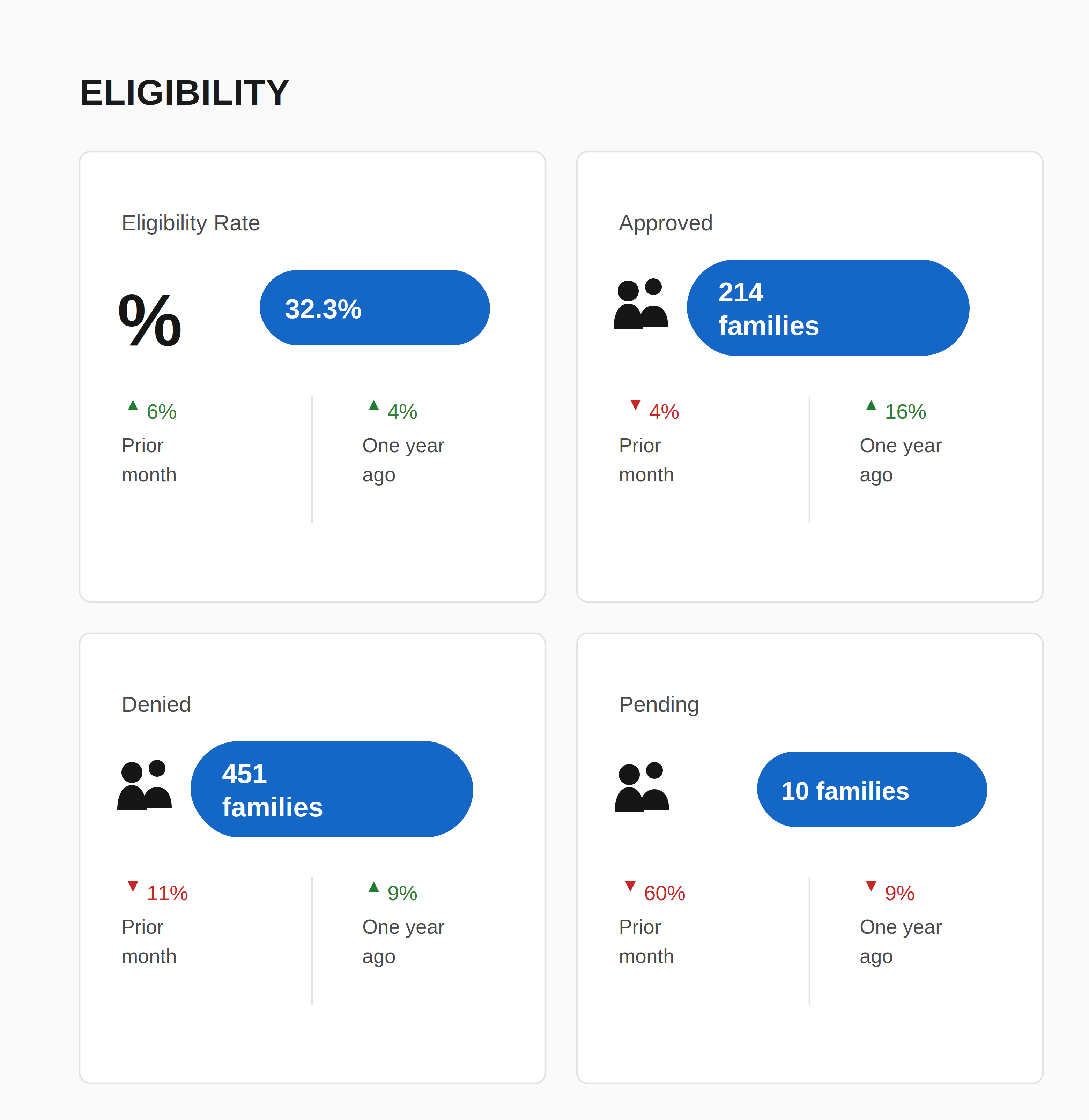
Eligibility Rate
29.4%
Eligibility
Monitor eligibility determinations, processing times, and approval rates to improve program performance and support timely service delivery.
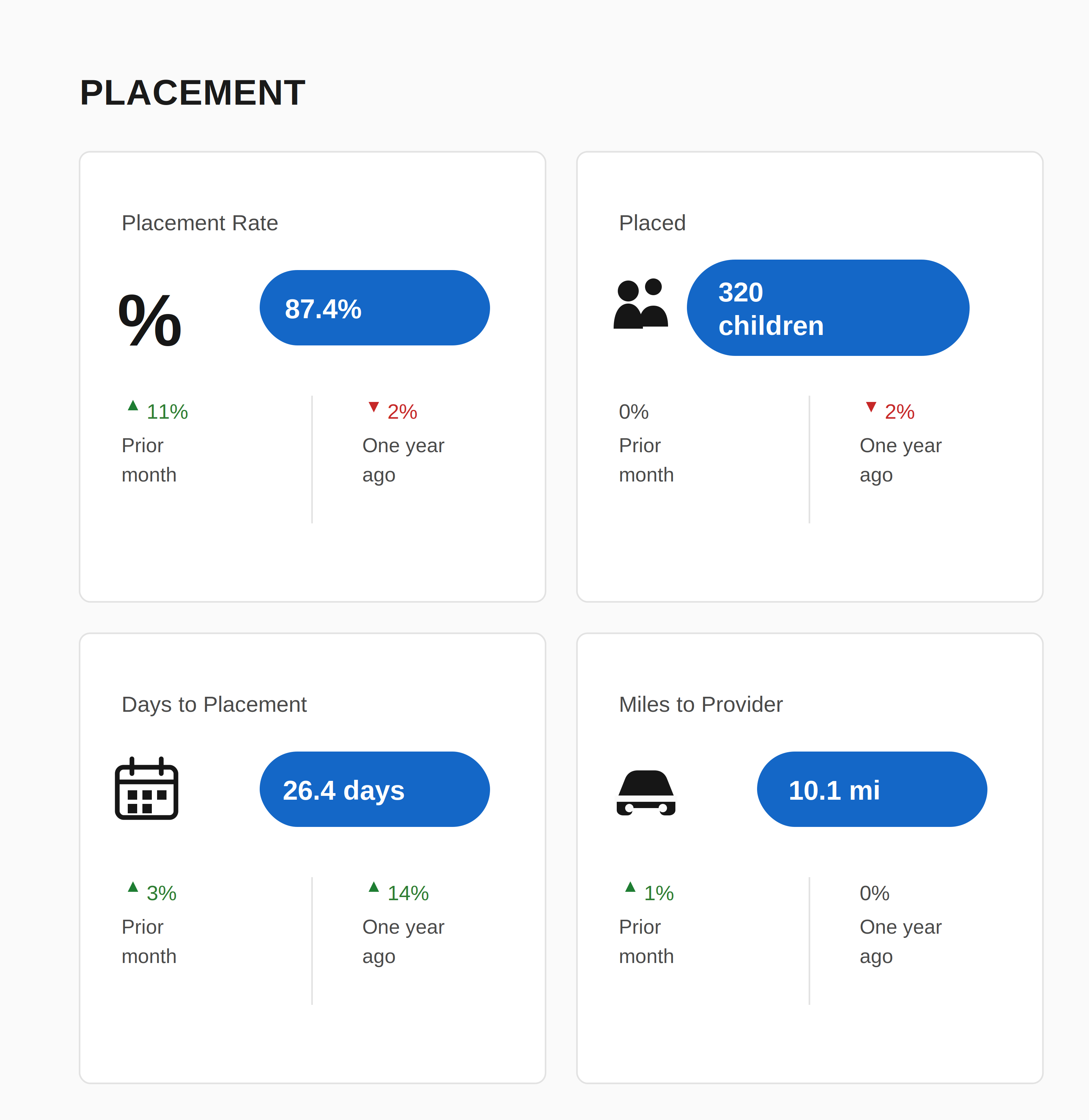
Placement Rate
95.1%
Placement
Measure time to placement, provider selection patterns, and geographic access to identify barriers to care.
xxxxxxxxxxxx
XX%
Participation
Analyze attendance and utilization patterns to understand engagement and identify opportunities for program improvement.
Attendance Rate
83%
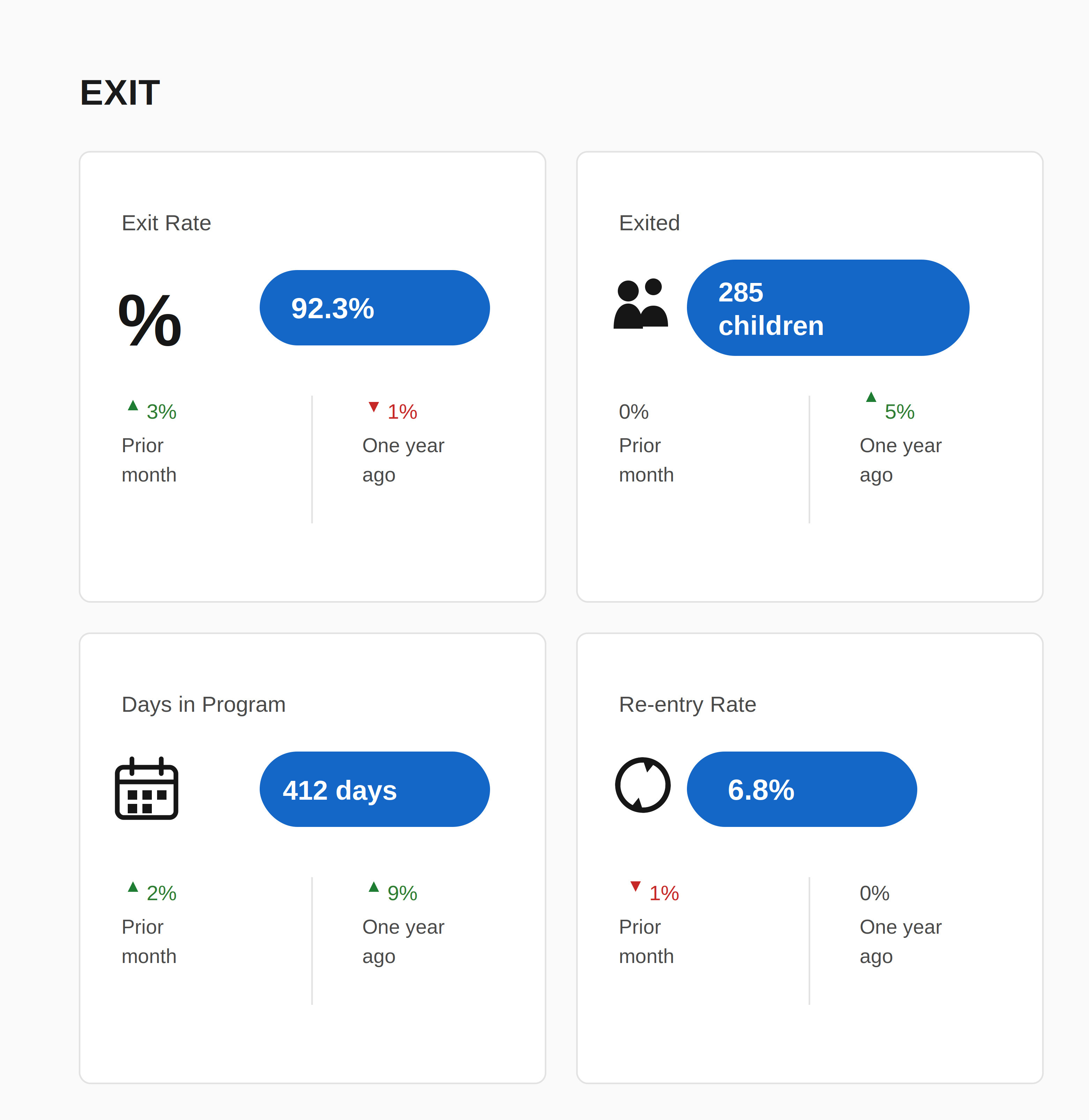
Program Exit
Support Program Oversight and Improvement
Monitor operational performance and trends from application to eligibility, placement, participation, and exit
Support reporting, resource allocation, and continuous improvement
Track and report program performance against key targets and requirements
Evaluate access and outcomes across regions and populations
Identify bottlenecks and delays before they affect families
Built for Systemwide Oversight
Most child care management platforms help providers run a center. CUSP is designed for agencies responsible for overseeing programs across multiple providers, regions, and funding streams.
By bringing together participant, provider, and program data in a single view, CUSP helps leaders understand how the system is performing as a whole, where resources are needed most, and how policy and operational changes affect outcomes.
Key Benefits
-
System-wide visibility across providers, regions, and programs
-
Flexible analytics tailored to state or local policies and reporting needs
-
Cross-system insights that are not available in provider-level tools
-
Scalable architecture that supports evolving programs and requirements
-
Ongoing platform enhancements and technical support
Frequently Asked Questions
CUSP Program Lifecycle Analytics functions as a complete child care participant journey analytics platform, tracking every stage a family moves through- from initial application and intake processing, through eligibility determination, provider placement, and ultimately program exit. Child care program application tracking analytics capture early intake timelines, while child care program exit reason analytics record why and how children leave the program. This end-to-end visibility gives state agencies a single, unified record of every child's journey, replacing the fragmented, siloed data that makes it difficult to identify trends or measure outcomes effectively.
CUSP operates as a real-time child care compliance monitoring tool by continuously measuring program timelines against pre-set regulatory benchmarks- without requiring staff to manually pull reports or cross-reference spreadsheets. The child care program compliance tracking software automatically generates compliance proof points, flags when thresholds are approaching or missed, and produces audit-ready documentation at any time. This is especially valuable for agencies managing CCAP child care program compliance analytics or Head Start program lifecycle analytics, where federal and state requirements demand consistent, traceable oversight. The result is a dramatic reduction in administrative burden while actually improving compliance accuracy.
CUSP's child care service bottleneck detection software works by analyzing time-stamped data at every stage of the participant journey and comparing actual processing times against expected benchmarks. Child care service delivery efficiency analytics then surface the specific steps- whether eligibility review, provider matching, or placement confirmation- where delays are systematically occurring. Agencies can view these patterns weekly, monthly, or quarterly and drill down to pinpoint the exact source of slowdowns. This makes CUSP a targeted child care program impact evaluation tool, not just a reporting dashboard- it helps administrators intervene early and reduce time-to-placement across the board.
While the best childcare management software options like Brightwheel and Procare are excellent tools for individual child care centers- handling billing, attendance, and parent communication- they are not designed for public program oversight at scale. CUSP is built specifically as a child care program performance analytics platform for state and county agencies managing thousands of participants across multiple providers and funding streams. Where standard child care software or top childcare software tools focus on center operations, CUSP solves the child care program data fragmentation solution challenge by unifying data across agencies, tracking regulatory compliance, and delivering child care outcomes equity analytics by population- capabilities that center-based software was never designed to provide.
Yes- fair access and equity analysis is a core capability of CUSP. The platform's child care outcomes equity analytics by population feature allows agencies to segment and compare outcomes by geographic region, demographic group, age range, and program type. Using miles to offer provider child care access analytics, agencies can identify where geographic barriers are limiting participation. Child care intake processing time analytics and placement rates can be compared across counties or provider networks to reveal systemic disparities. This makes CUSP a powerful public child care program oversight analytics tool for agencies committed to equitable service delivery and data-driven resource allocation.